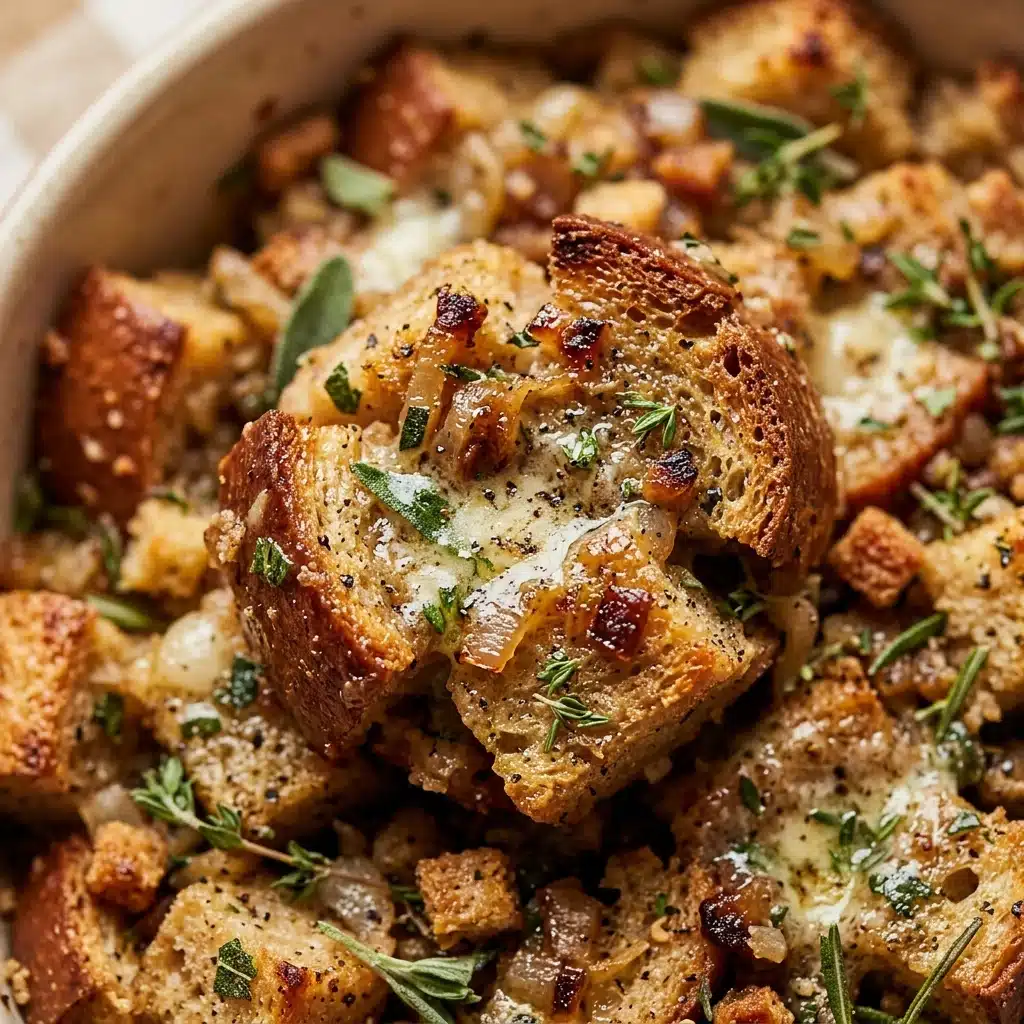
There is nothing quite like the smell of fresh sage and melting butter wafting through the kitchen. Sage Butter Stuffing is the ultimate comfort food that brings everyone to the table. This dish features golden, toasted bread cubes soaked in a savory herb-infused butter sauce. It is crispy on top, tender in the middle, and bursting with the earthy flavors of autumn. Whether you are hosting a big holiday dinner or just want a cozy side dish for a Sunday roast, this recipe is a guaranteed crowd-pleaser. The combination of aromatic vegetables and rich butter creates a savory depth that makes every bite feel like a warm hug.
Why Make This Sage Butter Stuffing
You should make this stuffing because it strikes the perfect balance between simple ingredients and sophisticated flavor. Unlike store-bought mixes, this homemade version allows you to control the texture and seasoning. The fresh sage provides a distinct, peppery aroma that pairs perfectly with the creamy richness of high-quality butter. It is also incredibly versatile. You can serve it alongside any roasted protein or even enjoy it as a main dish with a side of steamed vegetables. Best of all, it fills your home with an incredible scent that makes any meal feel special and celebratory.
How to Make Sage Butter Stuffing
Making this stuffing is a straightforward process that anyone can master. You start by preparing your bread cubes, ensuring they are dry enough to soak up the delicious liquids. Then, you sauté your fresh aromatics in plenty of butter until they are soft and fragrant. After mixing the herbs and vegetables with the bread, you gradually add broth to reach your desired consistency. Finally, you bake it in the oven until the top is beautifully browned and the inside is moist. The key is to handle the mixture gently so the bread cubes stay intact rather than turning into a mash.
Ingredients
- 10 cups dried bread cubes (sourdough or white bread works best)
- 1 cup unsalted butter
- 2 cups yellow onions, finely diced
- 1.5 cups celery, sliced thin
- 1/4 cup fresh sage leaves, finely chopped
- 1 tablespoon fresh thyme leaves
- 1 teaspoon salt (adjust to taste)
- 1/2 teaspoon cracked black pepper
- 2.5 to 3 cups halal chicken or vegetable broth
- 2 large eggs, beaten (optional, for a fluffier texture)
- 1/4 cup fresh parsley, chopped
Directions
- Preheat your oven to 350°F (175°C). Lightly grease a 9×13 inch baking dish with butter.
- Place the dried bread cubes in a very large mixing bowl.
- In a large skillet or saucepan, melt the butter over medium heat.
- Add the diced onions and celery to the butter. Cook for about 8 to 10 minutes until the vegetables are soft and translucent.
- Stir in the chopped sage and thyme. Cook for another 2 minutes to release the oils and fragrance of the herbs.
- Pour the butter and vegetable mixture over the bread cubes. Toss gently with a large spoon to coat the bread evenly.
- Whisk the eggs into 2.5 cups of the broth. Slowly pour this mixture over the bread.
- Toss the stuffing gently. If the bread still feels very dry, add the remaining half cup of broth. You want the bread to be moist but not dripping wet.
- Stir in the fresh parsley, salt, and pepper.
- Transfer the mixture to the prepared baking dish. Do not pack it down; keep it light and airy.
- Cover the dish with foil and bake for 20 minutes.
- Remove the foil and bake for another 20 to 25 minutes until the top is golden brown and crispy.
- Let the stuffing rest for 5 to 10 minutes before serving.
Nutritional Information
This recipe makes approximately 12 servings. The values below are estimates per serving:
- Calories: 245 kcal
- Total Fat: 16g
- Saturated Fat: 10g
- Cholesterol: 75mg
- Sodium: 480mg
- Total Carbohydrates: 22g
- Dietary Fiber: 2g
- Sugars: 3g
- Protein: 4g
How to Serve Sage Butter Stuffing
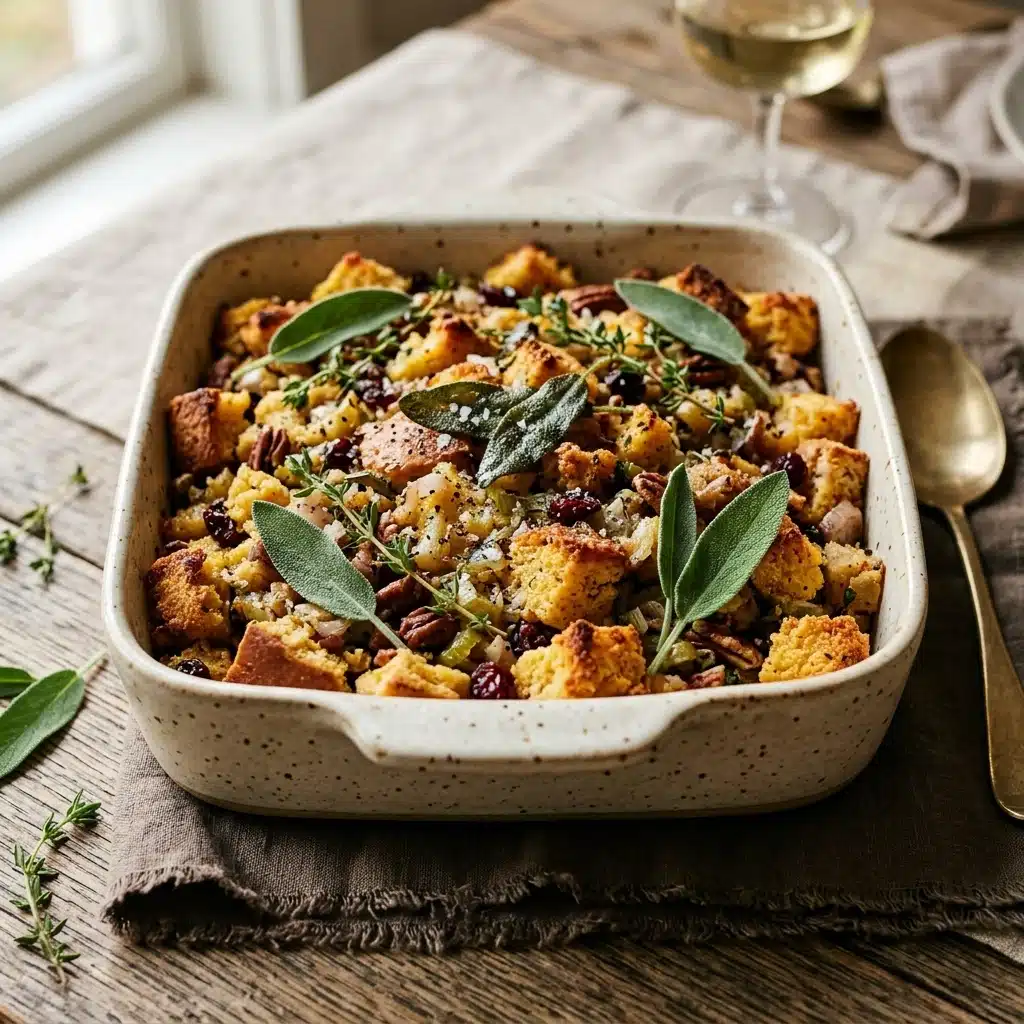
This stuffing is the star of any traditional dinner table. Serve it warm in a decorative ceramic dish to retain heat. It pairs exceptionally well with roasted chicken, turkey, or beef pot roast. For a complete meal, serve it alongside garlic mashed potatoes, roasted carrots, and a rich halal gravy poured right over the top. If you have leftovers, they make a fantastic base for a “holiday bowl” mixed with shredded meat and cranberry sauce. You can even fry leftover stuffing patties in a little butter the next morning and top them with a poached egg for a delicious breakfast.
How to Store Sage Butter Stuffing
If you have leftovers, allow them to cool completely before storing. Place the stuffing in an airtight container and keep it in the refrigerator for up to 3 or 4 days. To reheat, place the desired amount in an oven-safe dish, add a splash of broth to prevent drying out, and bake at 350°F until heated through. For longer storage, you can freeze the stuffing in a freezer-safe bag for up to one month. Thaw it in the fridge overnight before reheating. Avoid using a microwave for large portions, as it can make the bread cubes soggy instead of crispy.
Expert Tips for Perfect Sage Butter Stuffing
The secret to perfect stuffing is the quality of the bread. Use a sturdy bread like sourdough or a French loaf. Cut it into cubes and let it sit out overnight to dry, or toast it in a low oven until it feels like a crouton. This prevents the stuffing from becoming mushy. Another tip is to use fresh herbs rather than dried ones; fresh sage has a much cleaner and more vibrant flavor. When mixing, use a light hand. Over-mixing can break down the bread cubes. If you like a very crispy top, dot the surface with small pieces of extra butter right before the final stage of baking.
Delicious Variations
You can easily customize this recipe to suit your taste. For a sweet and savory twist, add one cup of diced apples and half a cup of dried cranberries to the mix. If you want a more hearty version, brown some halal beef sausage in the pan before adding the onions and celery. For a nutty crunch, stir in half a cup of toasted pecans or walnuts. Mushroom lovers can sauté sliced cremini mushrooms along with the vegetables for an earthy, umami flavor. If you prefer a spicy kick, add a pinch of red pepper flakes to the butter while it melts.
Frequently Asked Questions
1. Can I use store-bought bread cubes?
Yes, you can use bagged unseasoned bread cubes, but fresh bread that you dry yourself usually provides a better texture and flavor.
2. Can I make this recipe ahead of time?
Absolutely. You can prepare the mixture, place it in the baking dish, and keep it covered in the fridge for up to 24 hours before baking. Just add 10 minutes to the covered baking time.
3. What if my stuffing is too dry?
Drizzle a little more warm broth over the top and cover it with foil for a few minutes. The steam will help soften the bread.
4. What if my stuffing is too soggy?
Bake it uncovered for an extra 10 to 15 minutes. This allows excess moisture to evaporate and helps the edges crisp up.
5. Can I make this vegan?
Yes, substitute the butter with a high-quality vegan butter alternative and use vegetable broth. Omit the eggs and add a little extra broth for binding.
6. Do I have to use eggs?
No, the eggs act as a binder for a fluffier, more cohesive texture. If you leave them out, the stuffing will be more crumbly but still delicious.
7. Can I use dried sage instead of fresh?
You can, but use much less. Generally, use 1 tablespoon of dried sage for every 1/4 cup of fresh sage. The flavor will be more concentrated and slightly different.
8. What is the best type of broth to use?
A high-quality halal chicken broth offers the most traditional flavor, but vegetable broth is an excellent option for a lighter taste.
9. Can I add other herbs?
Yes! Rosemary and marjoram are wonderful additions that complement sage and thyme perfectly.
10. How do I know when the stuffing is done?
The internal temperature should reach 165°F (74°C), and the top should be golden brown and feel firm to the touch.
Conclusion
Sage Butter Stuffing is a timeless recipe that brings a sense of tradition and warmth to any meal. Its rich, buttery flavor and aromatic herb profile make it a standout side dish that everyone will love. By following these simple steps and using fresh ingredients, you can create a dish that is far superior to any boxed mix. It is the perfect way to show your family and friends some extra love during your next big dinner. Give this recipe a try today and see how a few simple ingredients can create such a wonderful flavor. We would love to hear how yours turned out—feel free to share your favorite variations with us!
Sage Butter Stuffing
- Total Time: 3 minute
- Diet: Halal
Ingredients
- 10 cups dried bread cubes (sourdough or white bread works best)
- 1 cup unsalted butter
- 2 cups yellow onions, finely diced
- 1.5 cups celery, sliced thin
- 1/4 cup fresh sage leaves, finely chopped
- 1 tablespoon fresh thyme leaves
- 1 teaspoon salt (adjust to taste)
- 1/2 teaspoon cracked black pepper
- 2.5 to 3 cups halal chicken or vegetable broth
- 2 large eggs, beaten (optional, for a fluffier texture)
- 1/4 cup fresh parsley, chopped
Instructions
- Preheat your oven to 350°F (175°C). Lightly grease a 9×13 inch baking dish with butter.
- Place the dried bread cubes in a very large mixing bowl.
- In a large skillet or saucepan, melt the butter over medium heat.
- Add the diced onions and celery to the butter. Cook for about 8 to 10 minutes until the vegetables are soft and translucent.
- Stir in the chopped sage and thyme. Cook for another 2 minutes to release the oils and fragrance of the herbs.
- Pour the butter and vegetable mixture over the bread cubes. Toss gently with a large spoon to coat the bread evenly.
- Whisk the eggs into 2.5 cups of the broth. Slowly pour this mixture over the bread.
- Toss the stuffing gently. If the bread still feels very dry, add the remaining half cup of broth. You want the bread to be moist but not dripping wet.
- Stir in the fresh parsley, salt, and pepper.
- Transfer the mixture to the prepared baking dish. Do not pack it down; keep it light and airy.
- Cover the dish with foil and bake for 20 minutes.
- Remove the foil and bake for another 20 to 25 minutes until the top is golden brown and crispy.
- Let the stuffing rest for 5 to 10 minutes before serving.
- Cook Time: Not specified