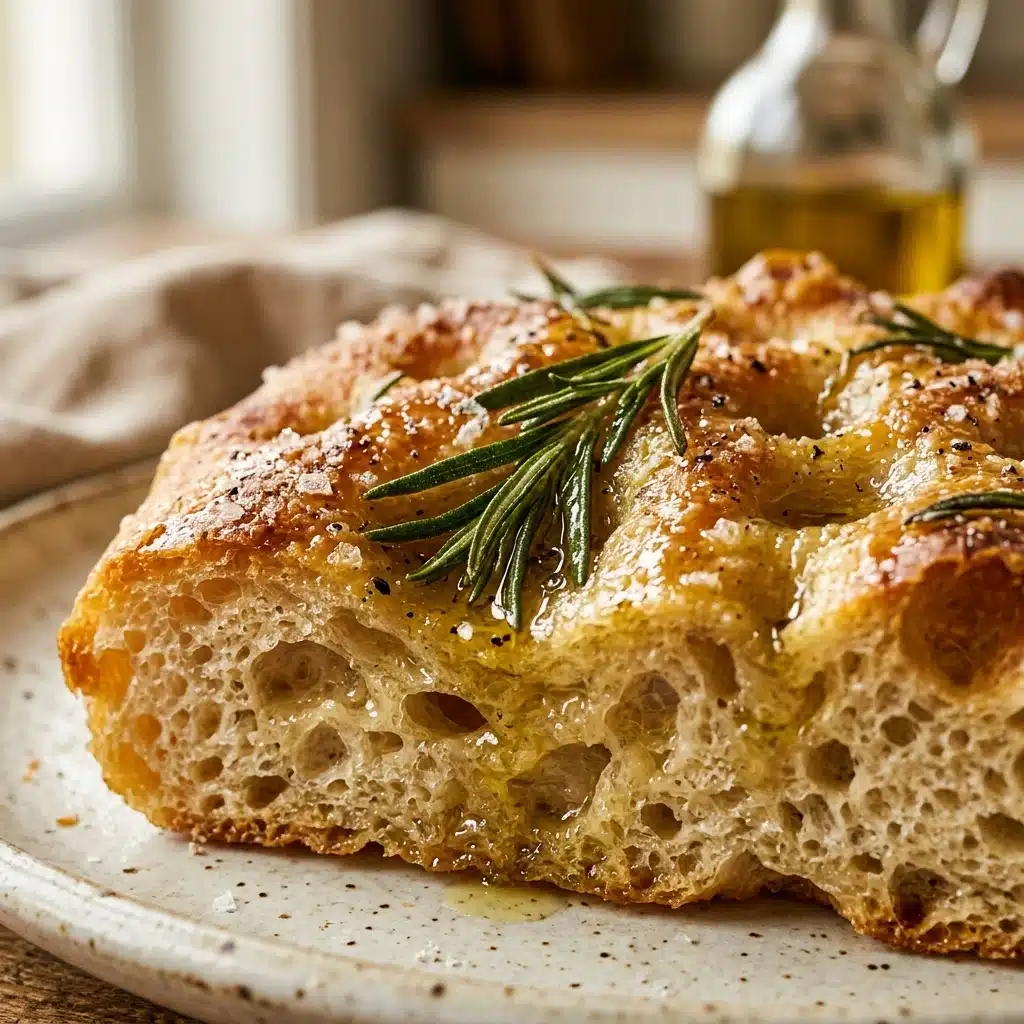
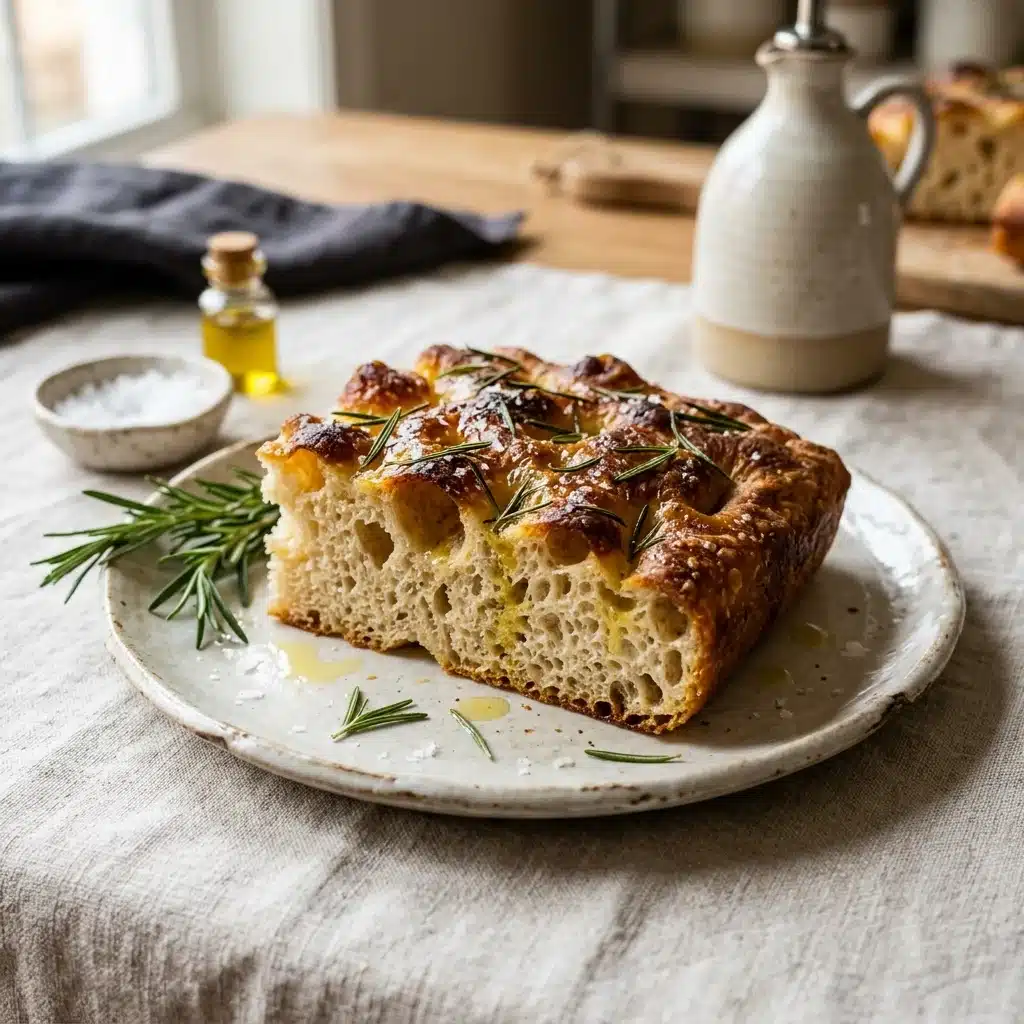
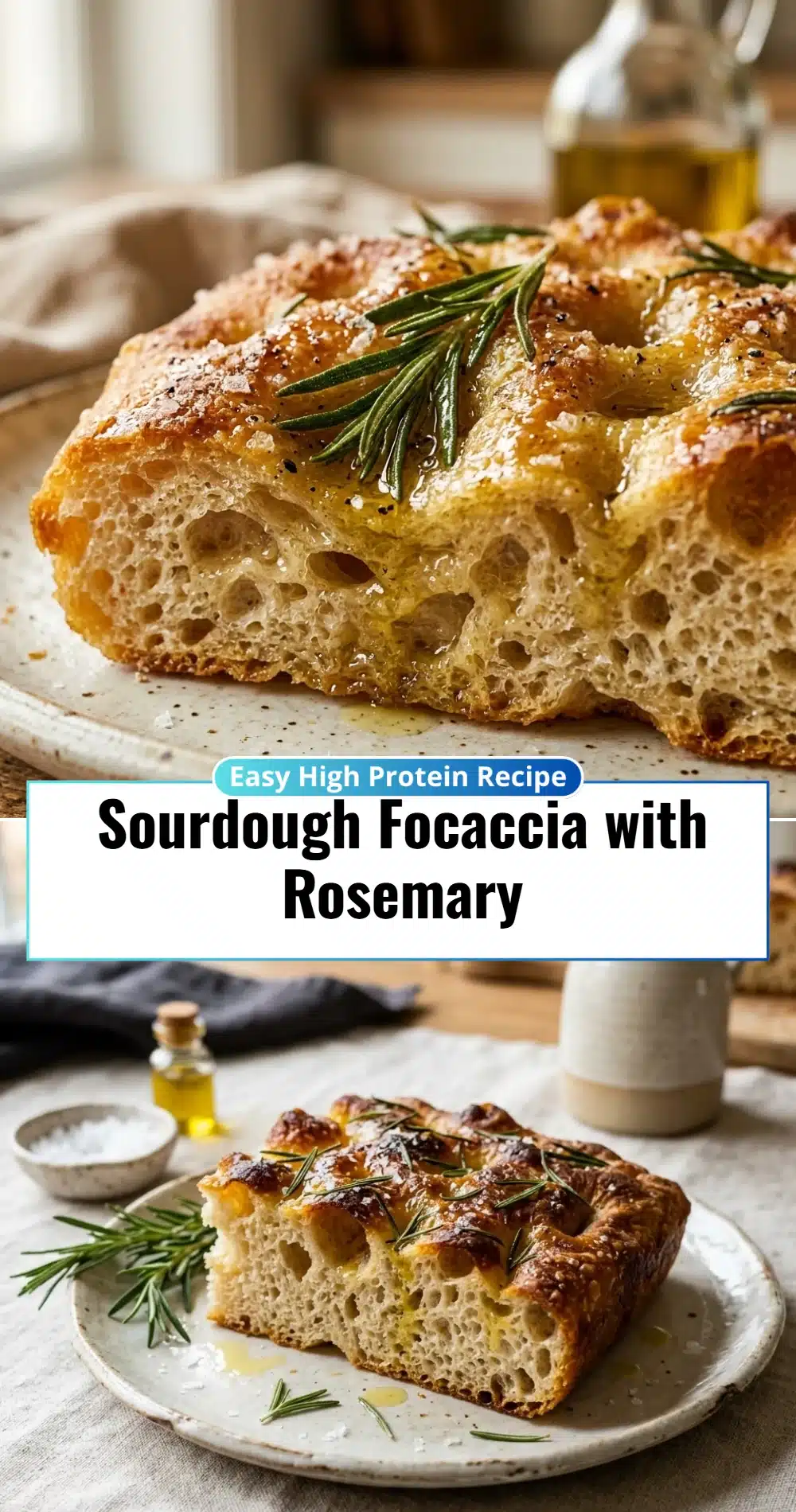
There is nothing quite like the smell of fresh bread baking in your kitchen. This sourdough focaccia with rosemary is a true crowd-pleaser. It has a crispy, golden-brown bottom and a soft, pillowy center filled with airy bubbles. The fragrant rosemary and rich olive oil create a simple yet deeply satisfying flavor. This bread looks beautiful on the table and tastes even better. Whether you are a beginner or a seasoned baker, this recipe will give you a beautiful loaf every time.
Why Make This Sourdough Focaccia with Rosemary
Making sourdough focaccia is a rewarding experience for several reasons. First, the long fermentation process makes the bread easier to digest than quick-yeast breads. It also develops a complex, tangy flavor that you cannot find in store-bought loaves. Second, focaccia is very forgiving. You do not need to worry about perfect shaping or scoring. The goal is a rustic, dimpled surface. Finally, it is incredibly versatile. It works as a side dish, a sandwich bread, or even a snack on its own. The combination of fresh rosemary and olive oil is a classic that never goes out of style.
How to Make Sourdough Focaccia with Rosemary
The process starts with a bubbly, active sourdough starter. You will mix your dough and let it rest, performing a few sets of “stretch and folds” to build strength. After a long bulk fermentation, the dough moves to a well-oiled baking pan. The most important step is the final proof, where the dough becomes light and jiggly. Once it has filled the pan, you pour more olive oil over the top and use your fingers to create deep dimples. Press in the fresh rosemary and sea salt, then bake it in a hot oven until it is perfectly golden and crisp.
Ingredients
- 100 grams active sourdough starter (bubbly and fed)
- 375 grams warm water
- 500 grams bread flour (high protein flour works best)
- 10 grams sea salt
- 20 grams honey or sugar (optional, for browning)
- 50 grams extra virgin olive oil (plus more for the pan and topping)
- 2-3 sprigs of fresh rosemary, leaves removed from the stems
- Flaky sea salt for finishing
Directions
- Mix the Liquid: In a large mixing bowl, whisk together the warm water, active sourdough starter, honey, and 20 grams of olive oil until the starter is mostly dissolved.
- Combine with Flour: Add the bread flour and sea salt to the bowl. Mix by hand or with a sturdy spoon until a shaggy dough forms and no dry flour remains. Cover the bowl with a damp cloth and let it rest for 30 minutes.
- Stretch and Fold: Over the next 2 hours, perform 4 sets of stretch and folds every 30 minutes. To do this, grab one side of the dough, pull it up, and fold it over the center. Rotate the bowl and repeat 4 times until the dough feels stronger.
- Bulk Fermentation: Cover the bowl and let the dough rise at room temperature for 6 to 10 hours (depending on the warmth of your kitchen) until it has doubled in size and looks bubbly.
- Transfer to Pan: Generously oil a 9×13 inch baking pan with olive oil. Gently tip the dough into the pan. Do not force it to the corners yet. Flip the dough once so it is coated in oil.
- Second Rise: Let the dough rest in the pan for 2 to 4 hours. It should spread out to the edges and become very bubbly and jiggly.
- Preheat: Preheat your oven to 425°F (220°C).
- Dimple the Dough: Drizzle 2 tablespoons of olive oil over the top. Use your fingertips to press deep holes all over the dough, reaching all the way to the bottom of the pan.
- Top and Bake: Sprinkle the fresh rosemary leaves and flaky sea salt over the top. Press the rosemary slightly into the dimples.
- Bake: Place the pan in the oven and bake for 20 to 25 minutes, or until the top is golden brown and the edges are crispy.
- Cool: Remove from the oven and let it cool in the pan for 5 minutes. Transfer to a wire rack so the bottom stays crispy.
Nutritional Information
This information is an estimate based on one serving (approximately 1/12th of the recipe):
- Calories: 210 kcal
- Total Fat: 7g
- Saturated Fat: 1g
- Sodium: 390mg
- Total Carbohydrates: 32g
- Dietary Fiber: 2g
- Sugars: 2g
- Protein: 5g
- Iron: 10% DV
How to Serve Sourdough Focaccia with Rosemary
This bread is best served warm, shortly after baking. You can slice it into squares or long fingers. It is perfect for dipping into a small bowl of high-quality balsamic vinegar and olive oil. If you are serving a hearty beef stew or a vegetable soup, this focaccia is the ultimate side dish for soaking up the broth. You can also slice the squares in half horizontally to create the most incredible sandwich bread for grilled chicken or roasted vegetables.
How to Store Sourdough Focaccia with Rosemary
Focaccia is best on the day it is made. However, you can store leftovers in an airtight container at room temperature for up to 2 days. To keep the crust crispy, avoid plastic bags; a paper bag or a bread box works better. For longer storage, wrap individual slices tightly and freeze them for up to 3 months. When you are ready to eat, reheat the slices in a 350°F (175°C) oven or a toaster oven for a few minutes. This will bring back that “just baked” crunch and soft interior.
Expert Tips for Perfect Sourdough Focaccia with Rosemary
- Use a Strong Starter: Make sure your sourdough starter is very active. It should be at its peak—bubbly and doubled in size—before you start mixing the dough.
- Do Not Scrimp on Oil: Olive oil is what gives focaccia its signature fried-crust texture. Don’t be afraid to use a generous amount in the pan.
- Be Patient: The second rise in the pan is crucial. If the dough hasn’t filled the pan and isn’t jiggly, your bread will be dense instead of airy.
- Wet Your Hands: When dimpling the dough, keep your fingers oily or slightly wet. This prevents the dough from sticking to you and ruining the bubbles.
- High Heat: A hot oven is necessary to get that golden color and the sudden “oven spring” that creates big air pockets.
Delicious Variations
- Garlic Lover’s: Add thinly sliced garlic cloves into the dimples along with the rosemary.
- Tomato and Herb: Press halved cherry tomatoes and dried oregano into the dough before baking.
- Olive and Onion: Top with pitted kalamata olives and very thin slices of red onion.
- Cheesy Delight: Sprinkle a handful of shredded halal-friendly mozzarella or parmesan over the top in the last 5 minutes of baking.
- Honey Rosemary: Drizzle a little extra honey over the top right when it comes out of the oven for a sweet and salty contrast.
Frequently Asked Questions
1. Can I use sourdough discard instead of an active starter?
It is best to use an active starter for the fluffiest results. If you use discard, the bread will be much flatter and denser because the yeast isn’t strong enough to lift the heavy dough.
2. My dough is very sticky, is that normal?
Yes! Focaccia dough is a high-hydration dough. It should be quite sticky. Avoid adding more flour, as this will make the bread tough. Use oiled hands to handle it.
3. Can I let the dough rise in the fridge?
Absolutely. You can do the bulk fermentation in the fridge for 24 to 48 hours. This actually improves the flavor and creates even more bubbles.
4. What if I don’t have fresh rosemary?
You can use dried rosemary, but use about half the amount. Soak the dried herbs in olive oil for 10 minutes before topping so they don’t burn in the oven.
5. Why didn’t I get big bubbles in my dough?
This usually happens if the dough didn’t ferment long enough or if the starter wasn’t strong. Ensure your kitchen is warm enough during the rise.
6. What kind of pan is best for baking focaccia?
A metal baking pan is best because it conducts heat quickly, leading to a crispier bottom crust. Glass or ceramic will work but may take longer.
7. How do I know when the focaccia is finished baking?
The top should be a deep golden brown, and the edges should be pulling away from the sides of the pan. The bottom should feel firm and crisp if you lift a corner.
8. Is this recipe halal?
Yes, all ingredients used in this recipe, including the sourdough starter, flour, and olive oil, are halal-friendly.
9. Can I make this with all-purpose flour?
Yes, you can. The bread will be a bit softer and have slightly less chew than if you used bread flour, but it will still be delicious.
10. Why is my focaccia sticking to the pan?
This usually happens if you didn’t use enough olive oil or if your pan isn’t non-stick. Be generous with the oil to create a barrier between the dough and the metal.
Conclusion
Sourdough focaccia with rosemary is more than just a piece of bread; it is a sensory experience. From the rhythmic dimpling of the dough to the incredible aroma that fills your home, every step is enjoyable. The result is a beautiful, artisan-style loaf that tastes like it came from a professional bakery. It is healthy, delicious, and perfect for sharing with friends and family. I encourage you to give this recipe a try and see how easy it is to master the art of sourdough. If you make it, please share your results and let us know how it turned out!
Sourdough Focaccia with Rosemary
- Total Time: 35 minute
- Diet: Halal
Ingredients
- 100 grams active sourdough starter (bubbly and fed)
- 375 grams warm water
- 500 grams bread flour (high protein flour works best)
- 10 grams sea salt
- 20 grams honey or sugar (optional, for browning)
- 50 grams extra virgin olive oil (plus more for the pan and topping)
- 2–3 sprigs of fresh rosemary, leaves removed from the stems
- Flaky sea salt for finishing
Instructions
- Mix the Liquid: In a large mixing bowl, whisk together the warm water, active sourdough starter, honey, and 20 grams of olive oil until the starter is mostly dissolved.
- Combine with Flour: Add the bread flour and sea salt to the bowl. Mix by hand or with a sturdy spoon until a shaggy dough forms and no dry flour remains. Cover the bowl with a damp cloth and let it rest for 30 minutes.
- Stretch and Fold: Over the next 2 hours, perform 4 sets of stretch and folds every 30 minutes. To do this, grab one side of the dough, pull it up, and fold it over the center. Rotate the bowl and repeat 4 times until the dough feels stronger.
- Bulk Fermentation: Cover the bowl and let the dough rise at room temperature for 6 to 10 hours (depending on the warmth of your kitchen) until it has doubled in size and looks bubbly.
- Transfer to Pan: Generously oil a 9×13 inch baking pan with olive oil. Gently tip the dough into the pan. Do not force it to the corners yet. Flip the dough once so it is coated in oil.
- Second Rise: Let the dough rest in the pan for 2 to 4 hours. It should spread out to the edges and become very bubbly and jiggly.
- Preheat: Preheat your oven to 425°F (220°C).
- Dimple the Dough: Drizzle 2 tablespoons of olive oil over the top. Use your fingertips to press deep holes all over the dough, reaching all the way to the bottom of the pan.
- Top and Bake: Sprinkle the fresh rosemary leaves and flaky sea salt over the top. Press the rosemary slightly into the dimples.
- Bake: Place the pan in the oven and bake for 20 to 25 minutes, or until the top is golden brown and the edges are crispy.
- Cool: Remove from the oven and let it cool in the pan for 5 minutes. Transfer to a wire rack so the bottom stays crispy.
- Cook Time: Not specified