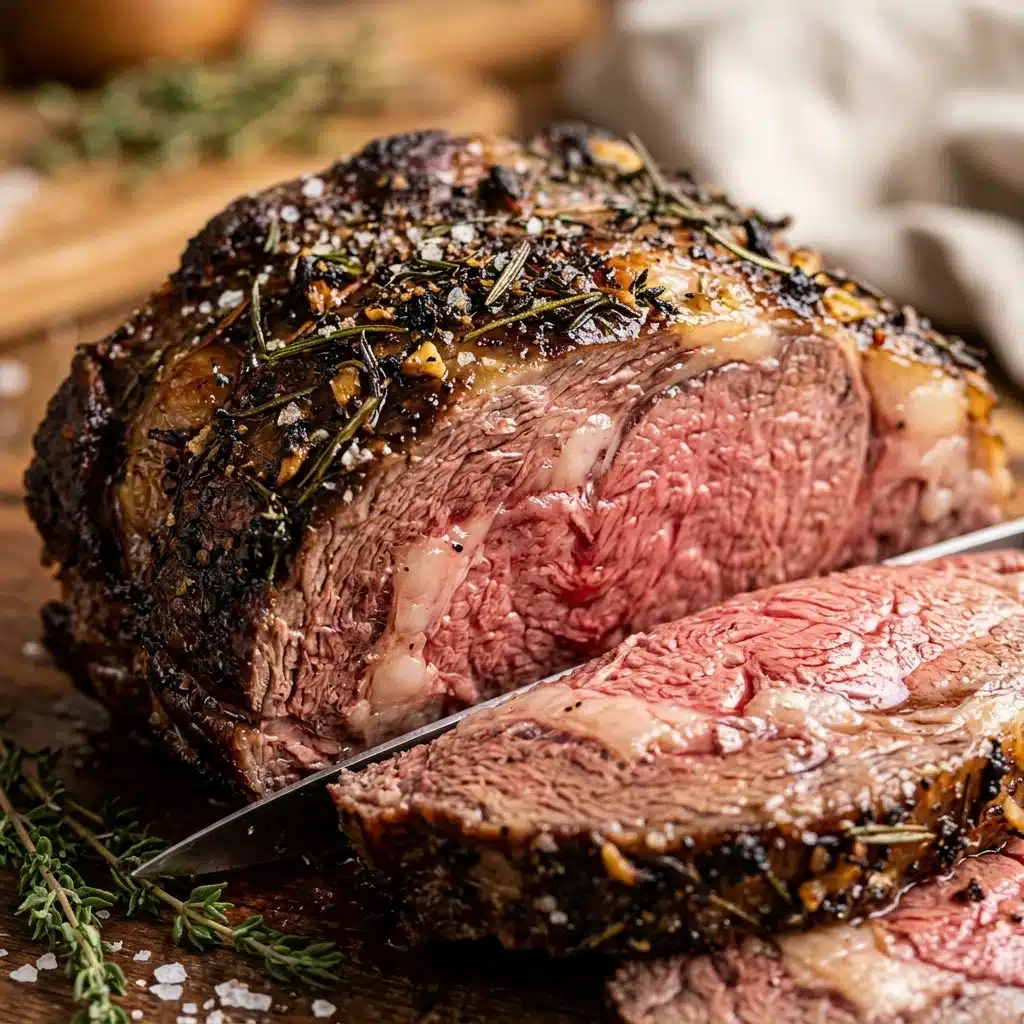
Nothing says a special occasion quite like a perfectly cooked standing rib roast. Often referred to as the “King of Roasts,” this cut of beef is prized for its incredible marbling, tender texture, and deep, savory flavor. Whether you are hosting a holiday dinner or celebrating a milestone, mastering the standing rib roast is a surefire way to impress your guests. While the cut might seem intimidating because of its size and price tag, the secret lies in simple preparation and patience. With a beautiful herb crust and a perfectly pink center, this recipe delivers restaurant-quality results right from your home oven.
Recipe Information
- Prep Time: 20 minutes
- Cook Time: 3 hours
- Total Time: 3 hours 20 minutes
- Servings: 8 servings
- Difficulty: Medium
Nutrition values
- Calories: 750 kcal
- Protein: 52g
- Carbs: 1g
Why Make This Standing Rib Roast
This standing rib roast is the ultimate centerpiece for any feast. Unlike smaller steaks, roasting the entire rib section allows the fat to render slowly, basting the meat from the inside out and creating a buttery texture that melts in your mouth. The “standing” part of the name refers to the bones, which act as a natural roasting rack, keeping the meat off the pan and allowing heat to circulate evenly. By following this method, you achieve a stunning contrast between the salty, herb-infused crust and the juicy, tender interior. It is a foolproof way to serve a high-end meal with minimal active kitchen time.
Ingredients
- 1 (3 or 4-bone) standing rib roast (about 7-9 pounds)
- 4 tablespoons unsalted butter, softened
- 3 tablespoons olive oil
- 2 tablespoons kosher salt
- 1 tablespoon coarse black pepper
- 6 cloves garlic, minced
- 2 tablespoons fresh rosemary, finely chopped
- 2 tablespoons fresh thyme, finely chopped
- 1 teaspoon onion powder
Directions
Step 1: Temper and Season the Meat
Remove the roast from the refrigerator at least two hours before you plan to cook it. Bringing the meat to room temperature ensures even cooking throughout the entire cut. Pat the roast completely dry with paper towels. In a small bowl, mix the softened butter, olive oil, garlic, rosemary, thyme, salt, pepper, and onion powder to create a thick herb paste. Rub this mixture generously over all sides of the roast, focusing on the fat cap.
Step 2: Initial High-Heat Sear
Preheat your oven to 450°F (230°C). Place the seasoned roast in a heavy roasting pan with the bones facing down; the bones act as a natural rack. Slide the pan into the oven and roast for 20 minutes. This initial blast of high heat creates a beautiful brown crust and seals in the juices through the Maillard reaction.
Step 3: Low and Slow Roasting
After 20 minutes, reduce the oven temperature to 325°F (165°C). Do not open the oven door during this transition. Continue roasting until a meat thermometer inserted into the thickest part of the roast (away from the bone) reaches your desired temperature. For medium-rare, aim for 120°F to 125°F. This usually takes about 13 to 15 minutes per pound.
Step 4: The Crucial Rest
Once the roast reaches the target internal temperature, remove it from the oven. Transfer the meat to a cutting board and tent it loosely with aluminum foil. Let the roast rest for at least 30 minutes. This step is mandatory; it allows the juices to redistribute throughout the meat fibers. The internal temperature will continue to rise about 5-10 degrees during this time.
Step 5: Carving and Serving
To carve, remove the twine if the roast was tied. Use a long, sharp carving knife to slice along the curve of the ribs to detach the meat from the bones. Set the bones aside (they are delicious to snack on later). Slice the boneless roast into thick slabs, approximately 1/2 inch to 1 inch thick. Serve immediately with your favorite sides and perhaps a dollop of horseradish cream.
Expert Tips for Perfect Standing Rib Roast
Always use a digital meat thermometer. Timing by weight is a good estimate, but every oven and every piece of meat is different. To ensure your roast is perfect, pull it out when the thermometer hits your goal. Another tip is to buy “Prime” grade beef if your budget allows; the extra marbling makes a world of difference in flavor. If you prefer a cleaner look, ask your butcher to “cradle” the roast, which means cutting the meat away from the bone and then tying it back on with string. This gives you the flavor benefits of the bone with the ease of carving a boneless roast.
Delicious Variations
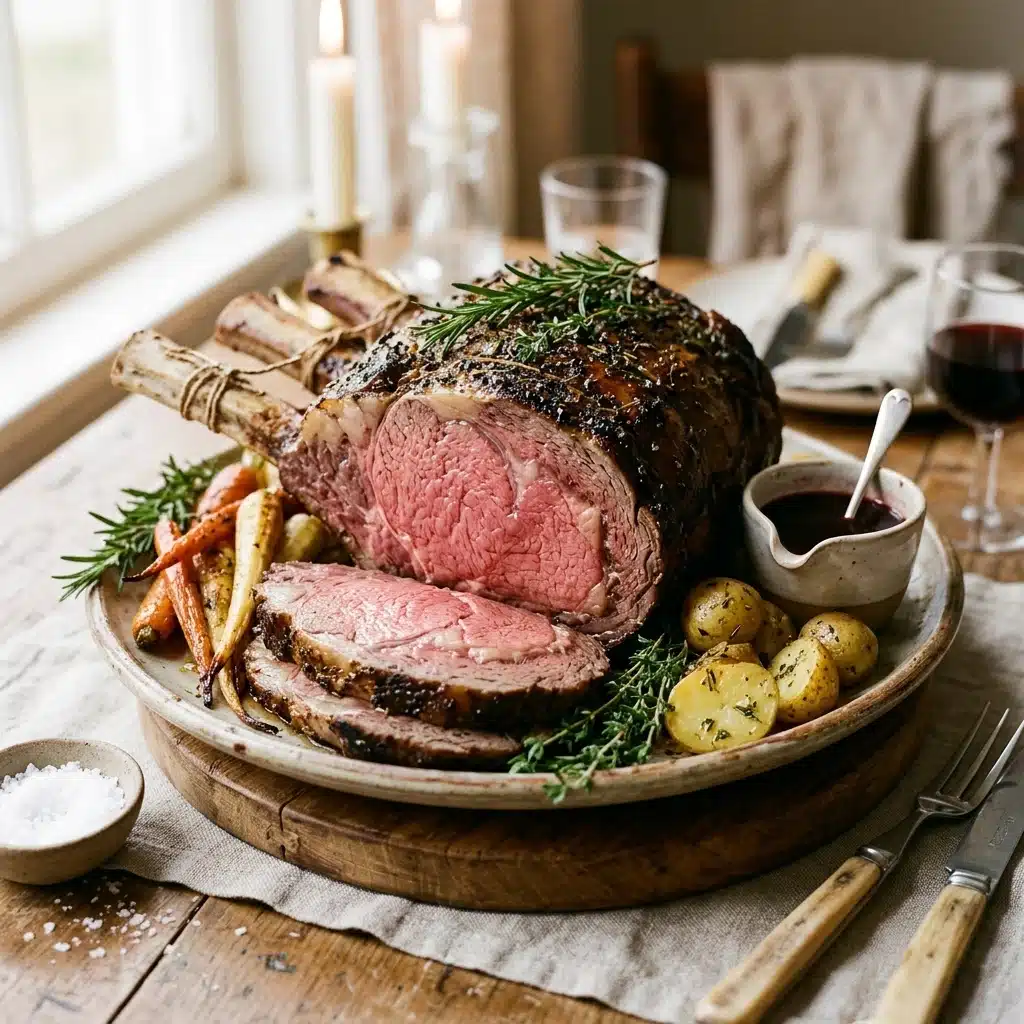
If you want to change the flavor profile, try a Peppercorn Crust by using a mix of crushed black, white, and pink peppercorns. For a more traditional British feel, serve the roast with Yorkshire puddings cooked in the rendered beef drippings. You can also create a Red Wine Jus by deglazing the roasting pan with a cup of Cabernet Sauvignon and simmering it with beef stock until reduced. For those who love a kick, a spicy Horseradish Rub made with prepared horseradish and mustard can be swapped for the herb butter.
Frequently Asked Questions
How much meat should I buy per person?
A good rule of thumb is to calculate one bone for every two people. If you want leftovers, aim for about 1 pound of raw weight per person.
Should I cook the roast covered or uncovered?
Always cook it uncovered. Covering the roast will steam the meat rather than roasting it, preventing that delicious crust from forming.
What internal temperature is best for medium-rare?
You should pull the roast out of the oven when it hits 120°F-125°F. After resting, it will reach the ideal medium-rare temperature of 130°F-135°F.
Can I use a boneless rib eye roast instead?
Yes, you can use the same seasoning and temperature settings. However, keep in mind that a boneless roast will cook slightly faster than a bone-in roast, so check the temperature earlier.
How do I store and reheat leftovers?
Store leftovers in an airtight container in the fridge for up to 4 days. To reheat without overcooking, place slices in a baking dish with a splash of beef broth, cover with foil, and warm in a 300°F oven until just heated through.
Conclusion
A standing rib roast is more than just a meal; it is an experience. By prioritizing a high-quality cut of meat and following the low-and-slow cooking method, you ensure a tender, flavorful result every single time. Don’t rush the process, and most importantly, don’t skip the resting period. Pair this roast with creamy mashed potatoes and roasted vegetables for a dinner that your family and friends will talk about for years to come. Enjoy the process of creating this culinary masterpiece!
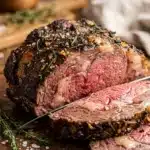
Standing Rib Roast
- Total Time: 3 hours 20 minutes
- Diet: Low-Carb
Ingredients
- 1 (3 or 4-bone) standing rib roast (about 7–9 pounds)
- 4 tablespoons unsalted butter, softened
- 3 tablespoons olive oil
- 2 tablespoons kosher salt
- 1 tablespoon coarse black pepper
- 6 cloves garlic, minced
- 2 tablespoons fresh rosemary, finely chopped
- 2 tablespoons fresh thyme, finely chopped
- 1 teaspoon onion powder
Instructions
- Remove the roast from the refrigerator at least two hours before you plan to cook it. Bringing the meat to room temperature ensures even cooking throughout the entire cut. Pat the roast completely dry with paper towels. In a small bowl, mix the softened butter, olive oil, garlic, rosemary, thyme, salt, pepper, and onion powder to create a thick herb paste. Rub this mixture generously over all sides of the roast, focusing on the fat cap.
- Preheat your oven to 450°F (230°C). Place the seasoned roast in a heavy roasting pan with the bones facing down; the bones act as a natural rack. Slide the pan into the oven and roast for 20 minutes. This initial blast of high heat creates a beautiful brown crust and seals in the juices through the Maillard reaction.
- After 20 minutes, reduce the oven temperature to 325°F (165°C). Do not open the oven door during this transition. Continue roasting until a meat thermometer inserted into the thickest part of the roast (away from the bone) reaches your desired temperature. For medium-rare, aim for 120°F to 125°F. This usually takes about 13 to 15 minutes per pound.
- Once the roast reaches the target internal temperature, remove it from the oven. Transfer the meat to a cutting board and tent it loosely with aluminum foil. Let the roast rest for at least 30 minutes. This step is mandatory; it allows the juices to redistribute throughout the meat fibers. The internal temperature will continue to rise about 5-10 degrees during this time.
- To carve, remove the twine if the roast was tied. Use a long, sharp carving knife to slice along the curve of the ribs to detach the meat from the bones. Set the bones aside (they are delicious to snack on later). Slice the boneless roast into thick slabs, approximately 1/2 inch to 1 inch thick. Serve immediately with your favorite sides and perhaps a dollop of horseradish cream.
- Cook Time: 3 hours 20 minutes